
CRM vs ERP vs MRP: Key Differences
CRM manages customer and sales relationships, ERP connects company-wide operations, and MRP goes deep into material and production planning. Start with the broken workflow, not the acronym.
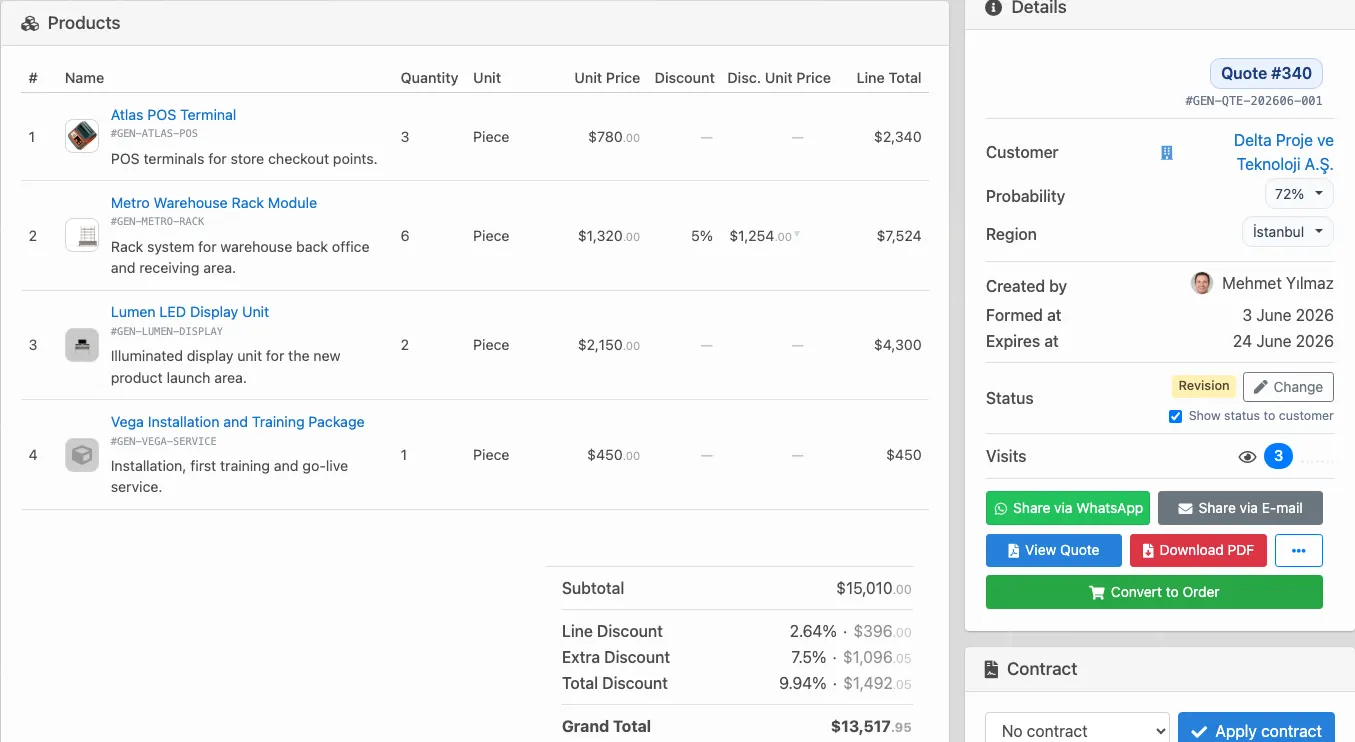
CRM preserves customer and demand context
Accounts, contacts, meetings, opportunities, quotes and after-sales records sit in the CRM domain.
| Decision criterion | CRM | ERP | MRP |
|---|---|---|---|
| Primary goal | Customer and sales relationship | Enterprise resources and processes | Material and production planning |
| Typical data | Accounts, opportunities, quotes, activities | Orders, inventory, purchasing, finance | BOMs, routes, stations, work orders |
| Primary users | Sales and service teams | Operations, warehouse, purchasing, finance | Planning and production teams |
| Key question | Who are we serving and what is next? | How do resources and departments work together? | What, how much and when should we make? |
ERP connects operations from order to finance
ERP relates orders, purchasing, inventory, warehouses, shipment, operational finance and reporting across departments.
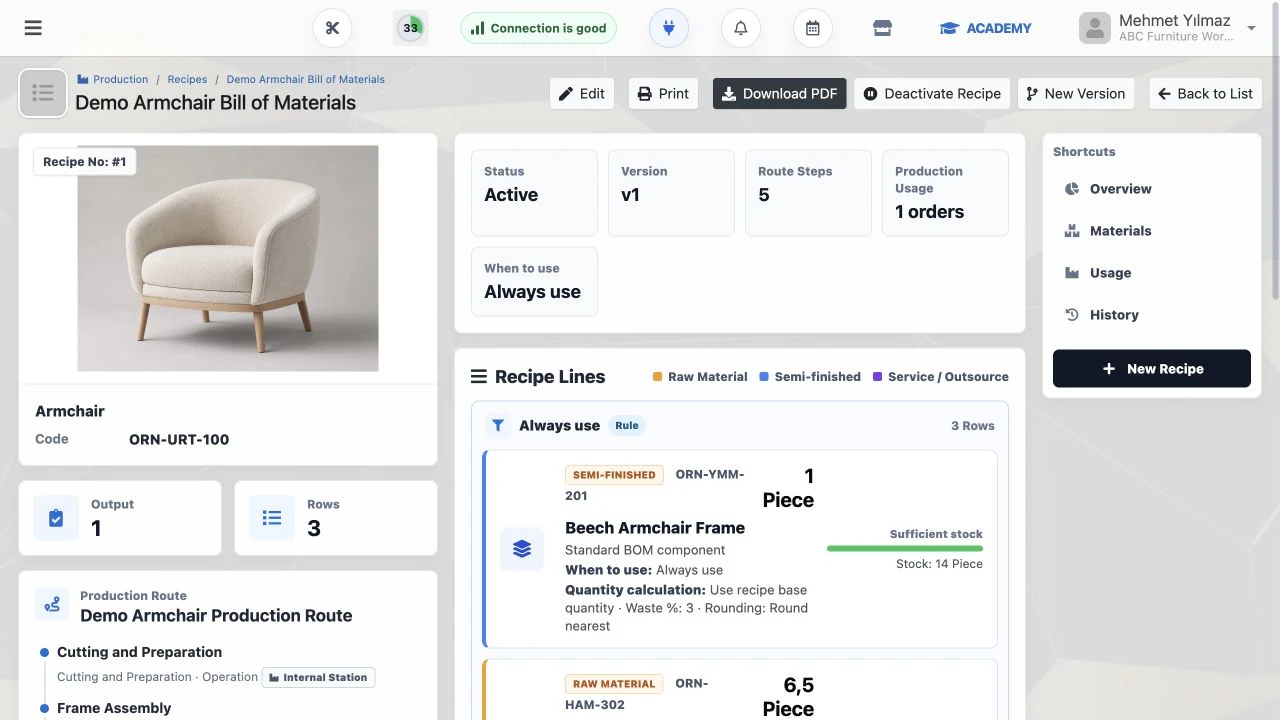
MRP details manufacturing requirements
BOMs, material requirements, routes, stations, production orders, capacity and costing sit at the centre of MRP.

Define data ownership when systems work together
CRM, ERP and MRP may be separate products or modules of one platform. Customer, product, order, inventory and BOM records must not be duplicated.
Frequently asked questions
Can CRM, ERP or MRP replace one another?
Not completely. Scope may overlap, but CRM goes deeper into relationships, ERP into company-wide operations, and MRP into materials and manufacturing.
Does every company need all three?
Only when its real workflows require them. Validate data ownership, licensed scope, integration boundaries and mandatory processes.
Review this workflow with Delbig
Share your sales, quoting, stock or operation flow with us; we will map the right Delbig setup for your team in a short meeting.