
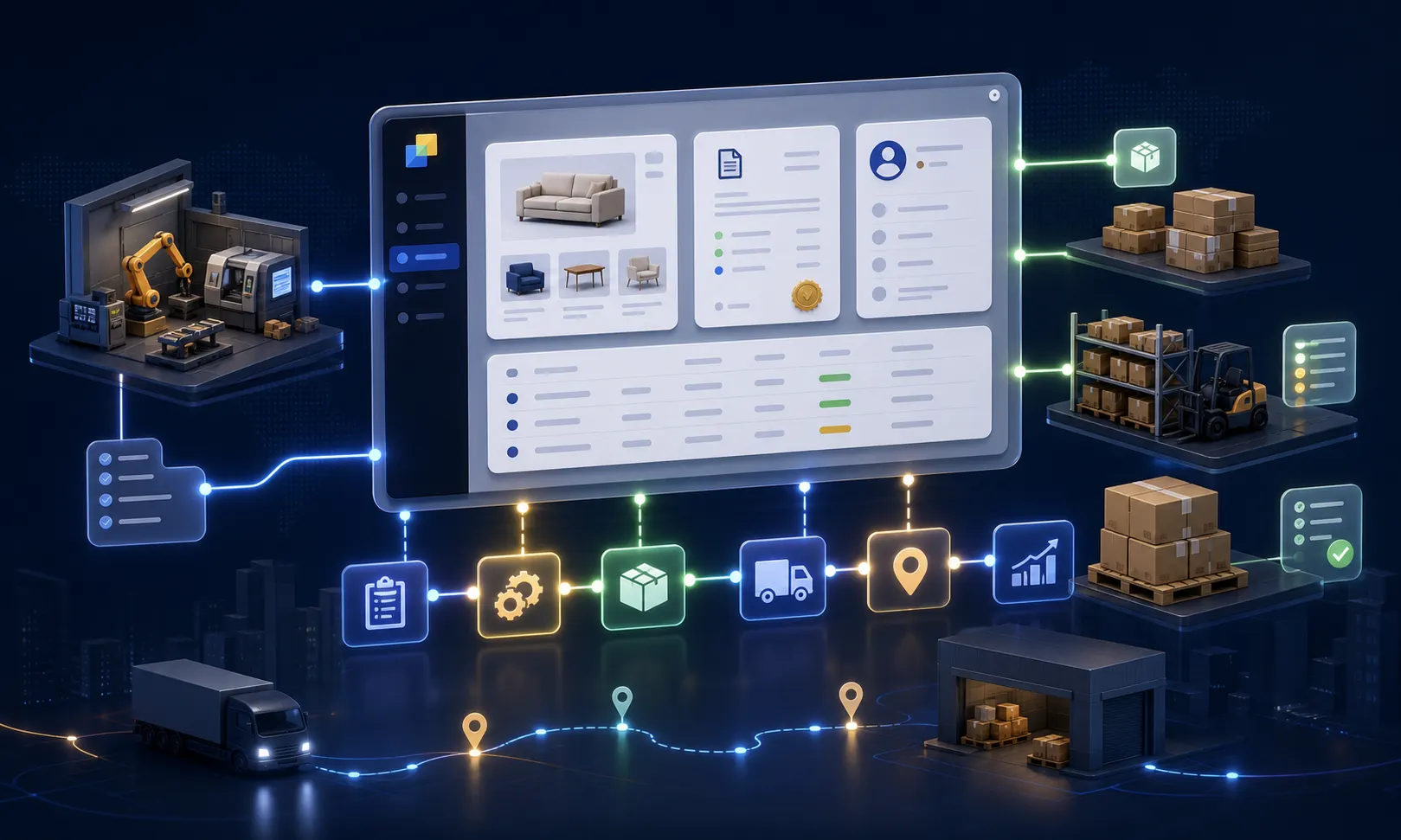
If production orders, BOM, routing, stations, materials and cost tracking are needed, an MRP module may be enough; if the whole factory, finance, capacity and enterprise resource planning must live on one backbone, full ERP should be evaluated. An MRP module strengthens production tracking connected to sales orders. Full ERP covers broader finance, capacity, purchasing and enterprise resource planning. Delbig MRP adds a production layer to Delbig quote, order, inventory, purchasing and shipment flow. If the company wants to open production orders from sales orders and track BOM, routing, stations, barcode, material requirements and production cost, an MRP module is a practical start. If production planning must include broad capacity management, multi-site resource planning, finance consolidation, payroll, budget and enterprise purchasing backbone, full ERP scope may be more appropriate. It helps with focused production tracking, but if full enterprise resource planning is needed, ERP should be evaluated separately. It is positioned with quote, order, inventory, purchasing, production cost and shipment visibility.
Separate production tracking layer from full ERP scope
When is an MRP module enough?
When is full ERP needed?
Frequently asked questions
Does an MRP module replace ERP?
Which flow does Delbig MRP connect to?
Related Delbig pages
Review this workflow with Delbig
Share your sales, quoting, stock or operation flow with us; we will map the right Delbig setup for your team in a short meeting.