
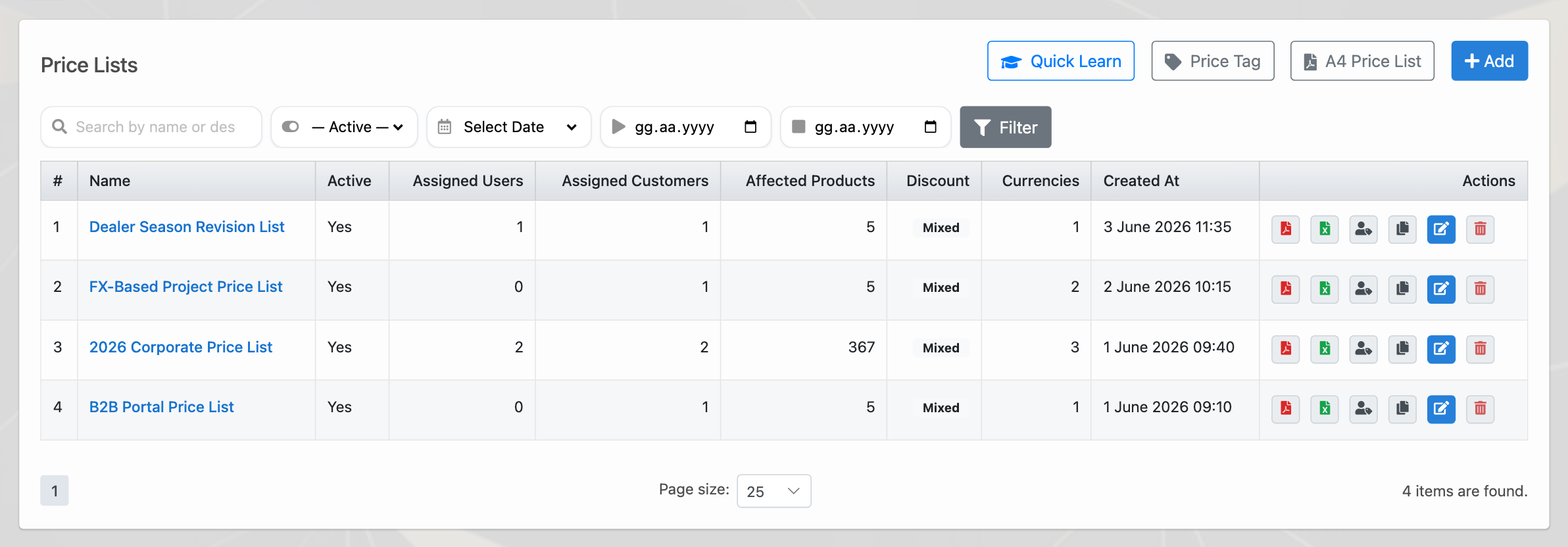
Excel can work at the beginning, but as quotes, price lists, customer history, orders, inventory, shipments and reporting grow, a centralized CRM such as Delbig becomes necessary. Excel works as files; Delbig works as connected processes and records. Price changes, customer history and order status stay in one place. Furniture companies often outgrow Excel because visuals, price lists, quotes and shipment details need to stay connected. As the team grows, different copies of price lists start circulating. Quotes can be prepared from outdated prices, approved quotes may not reach inventory, and delivery dates can disappear in messages. In Delbig, products, price lists, customers, quotes, orders and shipments remain connected. Reports come from live process records instead of isolated spreadsheets. No. Excel can still be useful for exports and analysis. The key difference is that Delbig becomes the source of operational truth. Cleaning product and price data is usually the first step. Then customers, quotes, orders and operations are connected to the system.
From scattered files to controlled workflows
When does Excel become risky?
How does Delbig solve this?
Frequently asked questions
Should Excel be abandoned completely?
What is the first step in moving from Excel to CRM?
Related Delbig pages
Review this workflow with Delbig
Share your sales, quoting, stock or operation flow with us; we will map the right Delbig setup for your team in a short meeting.